
Pete Turner Personal Selects
June 1, 2011
Last year, the digital juggernaut bulldozed another of photography’s most cherished icons into the dust. The victim was Kodachrome. On July 14, 2010, accompanied by a trace of media hoopla, the very last roll of this extraordinary film emerged from the final run of the processing line at Dwayne’s Photo Lab in Parsons, KS.
Kodachrome was more than just film, really. It was an institution, a complex imaging system that lurked inside little yellow boxes. With its crisp detail, a brilliant color palette, and nearly bombproof archival stability, Kodachrome reigned for 75 years as the reversal emulsion of choice for A-list commercial and editorial shooters. Names like Ernst Haas and Jay Maisel come to mind, along with dozens more—many veterans of the great era of American photo magazines. Topping this roster is the guy who’s often thought of as photography’s most avid Kodachromista. He’s soft-spoken Pete Turner, one of our craft’s rare superstars, and himself a living icon of color imaging. For 55 years, he’s been playing the chromatic spectrum like it was his own private musical instrument.
Unlike most shooters of his vintage, Pete Turner’s career was kick-started by color, rather than black and white. He’d been drafted into the army following his 1956 graduation from R.I.T. (Jerry Uelsmann, Paul Caponigro and Bruce Davidson were among his classmates), and found himself running the Type C lab at a Signal Corps installation in Astoria, NY. The work allowed him to begin assembling his portfolio. Color printing back then was a significant luxury. A budding shooter almost never showed up at an art director’s office with a portfolio of C-prints. Uncle Sam’s color lab made Turner the exception; when he returned to civilian life, he quickly began picking up a flurry of assignments from Look, Esquire, Horizon and National Geographic. One of the great careers in American photography had been launched.
Proto-Photoshop
Thanks to the signature amped-up chroma in almost all of Turner’s work, a lot has been made of his association with Kodachrome. Turner became the acknowledged master of exploiting the film’s unique sparkle. His first important collection of African images, shot for Airstream Trailers—an early assignment he calls “the seminal break of my lifetime”—consumed 300 rolls, and owes a lot of its creative punch to Kodachrome’s high acutance and intense color. But the most important Turner-Kodachrome link lies elsewhere, in what, for Turner, began as a personal gripe.
“After a few years in this business,” he recalls, “I grew weary of the damage that engravers and color separators were inflicting on my original transparencies. It wasn’t intentional, it just seemed to be an accepted liability of the reproduction process back then, and I refused to accept it.” His solution: Submit high-quality dupes in lieu of the original chromes. “There were precision duping stocks available,” he says, “but I tried the process using Kodachrome instead, and the effect was remarkable. From one generation to the next, the Kodachrome built up scale and color saturation, with little or no loss of sharpness. I soon realized, I’m looking at improvements on the originals, not just duplicates.”
Manhattan’s well known camera repair specialist Marty Forscher helped Turner assemble a modified version of the Repronar slide duplicator, mounted with a 35mm Nikon body and close-up lens, and equipped with strobe and stages for adding color filtration.
Today, of course, image acquisition is a whole new game. But the reason at least some of those sliders in your aftercapture software even exist is to prod your images in the direction Turner was going with his duping technique. He couldn’t have known it at the time, but the award-winning imagery that makes up the Pete Turner canon was a portent of things to come, a proto version of Photoshop, Lightroom, et. al. It adds a kind of clairvoyant dimension to that lyric from the Kodachrome song: “I can see the writing on the wall.”
Shoot Your Own Vision
This much-admired film has left the scene, and Turner now embraces the digital world, sans Kodachrome and his treasured Repronar. Most of his work, including pieces that go back 50 years and more, is thoroughly contemporary and as powerful today as it was when he first created the images. The scores of books, posters, magazine covers and spreads, monographs, interviews, profiles, album covers, countless showings in galleries and museums have nearly appropriated Pete Turner as de facto public property. But the impulse behind his photographs has always been a private matter. “You shoot your own vision,” he said, and he’s been doing that since the beginning.
Turner remembers an important nugget of advice he got early in his career: “Frank Zachary [Holiday magazine editor/art director] told me simply, ‘Just shoot the things you like.’ I took his advice. Color is what attracts me to a potential subject, so that’s what I shoot.” Turner’s famously vivid graphic compositions are a kind of genre unto themselves, the legacy of his personal fascination with the raw power of color. So much of his creative oeuvre has saturated the world’s media over the years, the editors of Rangefinder thought it might be time to present, on these pages, a collection of Turner’s personal favorites—not necessarily the best sellers, but his own personal selects.
Jim Cornfield is a contributing editor of Rangefinder, and a veteran writer and commercial photographer. Over the years he’s profiled such photographers as Bert Stern, Lawrence Schiller, Douglas Kirkland, David Douglas Duncan and Bill Eppridge, to name a few. Cornfield lives and works in Malibu Canyon, CA.
Related Articles
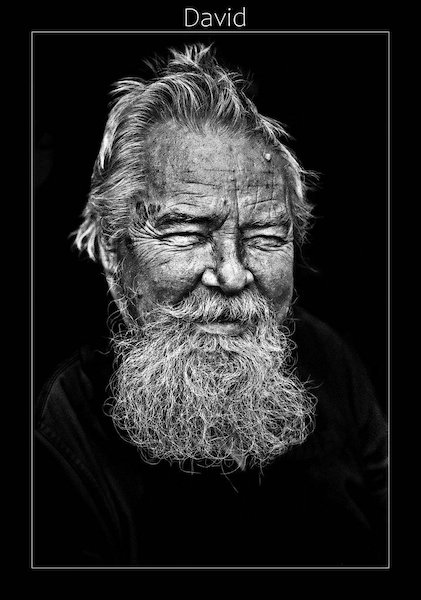
Capturing Humanity: Crombie McNeill’s Portraits of the Homeless
July 19, 2023
When Canadian photographer Crombie McNeill first started his career in photojournalism in the early 1960s, a peer suggested that he visit the Union Mission and take some portraits of the homeless people there in order to build his portfolio. Based in Ottawa, Canada, for the entirety of his career, McNeill entered the Union Mission skeptical that anyone would allow him...
More »
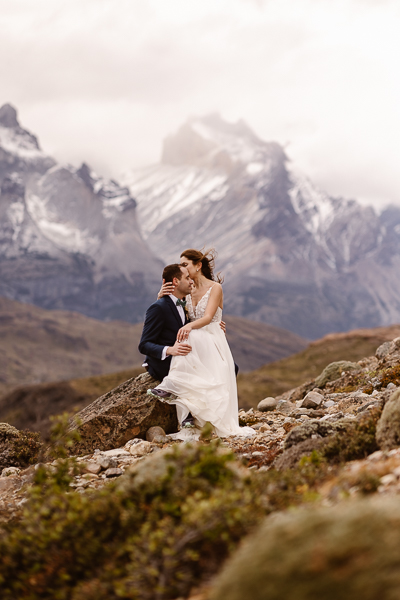
From the Rockies to Patagonia: Elopements that Go the Extra Mile
June 28, 2023
With the eye of an eagle, the endurance of a mountain goat, and the joy of a wildflower in the breeze, Chilean-born Andrea Enger was destined to become a photographer of adventure elopements. She has overcome her share of challenges as both a Latina woman and immigrant, pioneering into photography with her heart set on a life of creativity. Now...
More »
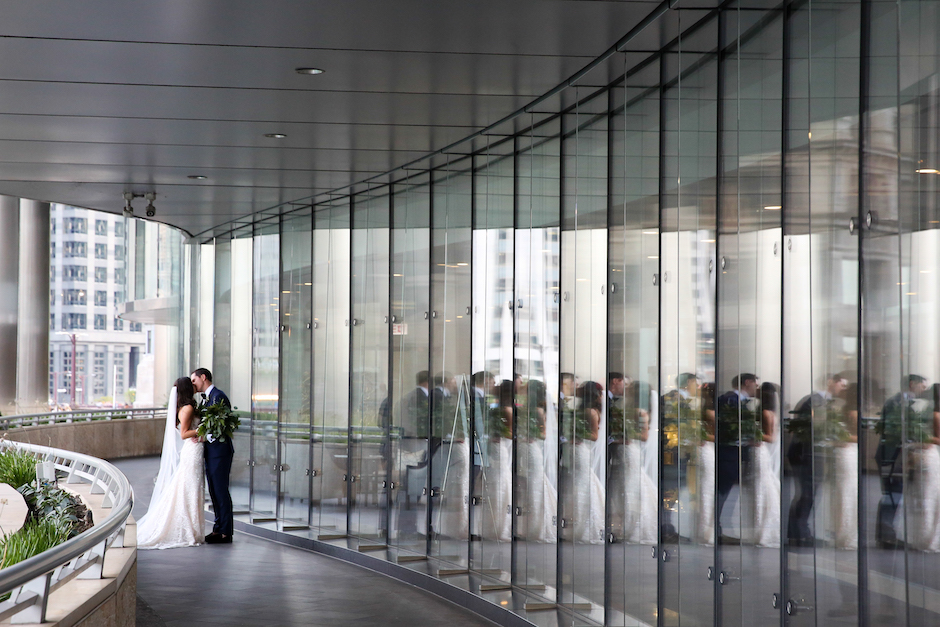
Robyn Lindemann Finds the Light in her Darkening World
February 27, 2023
Robyn Lindemann had to give up her wedding business after being diagnosed with retinitis pigmentosa. Now she's traveling the world before she goes blind.
More »